I recently read two articles on that apparently rare specimen: the male yoga student. In an undated Yoga Journal article, “Where Are All the Men?” Andrew Tilin, considers why men aren’t naturally inclined toward yoga. In a December 22, 2012, New York Times article, “Wounded Warrior Pose,” William Broad investigates whether men risk injury doing asana.
The takeaway from both articles (whether true or not) is nothing startling: Men are naturally less flexible than women (although even researchers “can’t specifically link it to differences in hormones, musculature, or connective tissue”). Men are more likely than women to sustain major injuries from yoga (women sustain more injuries overall, but less serious ones). Men are driven by competitive challenge and thus overdo to prove themselves (or they avoid yoga altogether). Men regard yoga studios as a female domain, foreign and discomfiting.
Reading the two, I rifled through my mental catalog of male yoga classmates, teachers, and students. Are they stiffer than female counterparts? Generally, yes. But, even among beginners, there are clear exceptions. In fact, I find a huge range in male flexibility, from rigidly immobile to off-the-charts elastic.
That said, my male sample size is much, much smaller than my female sample size. So my conclusions (and perhaps the cited studies’) might be based on invalid comparisons. Maybe the men who gravitate toward yoga represent particular types: men rehabbing injuries, retirees seeking relief from decades of wear-and-tear, musclebound athletes, husbands dragged to class by their wives, naturally flexible guys who take easily to asana.
Likewise, there might be self-selection in the female yogi cohort. Many women who are keen practitioners (who loved yoga asana from day one) are innately supple. We all tend to do what “feels good” or what we’re “good at.” Maybe flexible men end up doing more traditionally male sports, from martial arts to swimming, while flexible women are attracted to yoga.
 Tilin states that boys and girls are similarly limber until adolescence. Really? I recently taught a healthy, slim 12-year-old girl who struggled to do Adho Mukha Svanasana (much less Uttanasana) with a straight spine. Her pelvis was posteriorly tilted due to tight hamstrings. At twelve! Around the same time, I taught a couple of teen brothers; both were sporty, fit, and more flexible than the girl; but one was definitely tighter in the shoulders and hips. I suspect that genetics are more influential than gender.
If men naturally have more muscle than women do, how come some men are so loose? Once, after I taught my class at a community centre, the next teacher, a lanky 40-ish male, was warming up in the room. I turned away for a moment, gathering my belongings, and when I looked back he was flat on the floor in full Kurmasana, arms and legs shooting out, chin comfortably grounded. Splat!
I asked him about his yoga background, which is Ashtanga. He told me that he’d done distance sports, including triathlons, before trying yoga. “I was so stiff at first,” he said. “My classmates would make fun of me because my knees would be sticking way up in Baddhakonasana.” Is his case an example of transforming one’s flexibility, to heck with genetics (and gender, if it does matter)?
Ultimately, whether men are less flexible than women is neither here nor there. As a practitioner, you must deal with the hand you’re dealt, male, female, genetically loose or tight. As a teacher, you must see each individual body, avoid assumptions, and prevent injury.
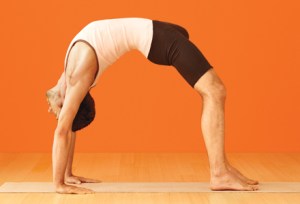
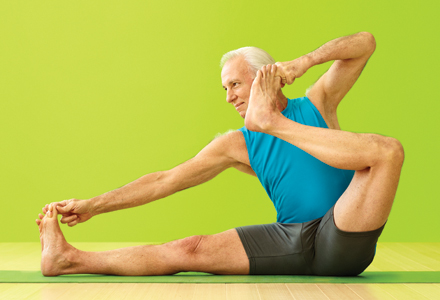
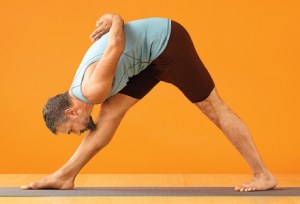
Images: Yoga Journal, Urdhva Dhanurasana, Garcinia Cambogia for Weight Loss, Akarna Dhanurasana, and Parsvottanasana


 Yoga Spy
Leave a Comment