“The Sanskrit words all sound alike,” I once heard a yoga student say. “I’m just not motivated to learn pose names.”
She was otherwise a keen student. Although she took up yoga later in life, she’d done other types of movement work and had strong body awareness and self discipline. She wasn’t the type to be flippant about any aspect of a practice and yet…
I got to thinking about yoga pose names and whether knowing them is essential. Is there value in knowing “Adho Mukha Svanasana” or does merely doing the pose suffice?
How I Picked Up Pose Names
During my years as a beginner yoga student, I didn’t pointedly memorize pose names or anything like that. Rather, by frequently attending classes, I was regularly exposed to the nomenclature. I might have looked up obscure names online, but mostly only heard them uttered in class.
The first yoga book that I bought was Yoga: The Iyengar Way by Shiva, Mira, and Shyam Mehta. I liked the large format, clear descriptions, and non-trendy look of the Mehtas. But I didn’t read the book cover or cover; rather, I flipped through it as an occasional reference source. In the early 2000s, curious about the yoga world out there, I subscribed to Yoga Journal, which gave me additional exposure to relevant topics, themes, and words.
Little by little, without really thinking about it, I learned pose names and a bit of Sanskrit.
Do You Need a Yoga Vocabulary?
I know yoga practitioners who are amateur Sanskrit scholars. They like to break down the etymology of pose names and to parse the Yoga Sutras and other ancient texts.
I don’t think that becoming a Sanskrit expert is necessary to be a yoga practitioner. But there are practical reasons to learn Sanskrit pose names. First, these words constitute a universal language. You can go to any country and, even if you can’t speak a word of the native tongue, you can attend a yoga class and identify the poses.
Second, if you take virtual classes, you don’t have classmates to follow. If the teacher calls out a pose name without demonstrating it, you’ll be stumped if you don’t recognize it “by ear.”
Moreover, developing a yoga vocabulary enhances yoga learning as a whole. For me, knowing pose names organizes my thoughts about yoga. I have a word to identify a pose, to research it, to discuss it with others. It’s a mental shortcut to conjure it up. Isn’t that why every field of study has its nomenclature and terms of art—not only academic fields such as medicine and law, but any subject, from coffee to knitting to golf?
Once, I tried listing a few shoulder exercises that my physiotherapist had taught me. She was straightforward in her teaching, but she didn’t give each exercise a memorable name. Instead, on the accompanying video sent to me, they had names such as Shoulder Eccentric Adduction in Side Lying, Resisted Shoulder Abduction to 90 Degrees, and Bilateral Glenohumeral Joint Forward Flexion with External Rotation Resistance (to 90 Degrees). I knew what they meant, but it’s tiresome to wrap my mind around such awkward names.
Finally, associating the poses with Sanskrit is a reminder that yoga is more than physical exercise. Even if you don’t extensively study the philosophy, the bits and pieces of Sanskrit are a wake-up call.
Putting Names to Faces
I like knowing “names,” not only in academic learning, but also in getting to know people. For example, as a teacher, I make it a point immediately to learn students’ names. When a new student arrives, I address them by name several times during their first class. I feel more connected (and I’m more likely to remember the name).
Does knowing students’ names change my teaching? In terms of nuts-and-bolts instruction, no. But knowing people by name—in addition to face, body, temperament—helps me to teach better on a personal level. I don’t know exactly why, but I can recall a person more vividly if I know their name. Having an identifier for anything somehow deepens my “relationship” with it.
Learning Nomenclature Shows How Invested You Are
Do you know what an “eagle” means in golf? I know because I recently looked it up. But, in a few months, I might not.
In Hawaii, where I grew up, golf is popular both to play and to watch. My parents regularly watch pro tournaments on TV—and my dad plays on the local course three mornings a week. I don’t want to be too clueless about golf.
But, since I neither play nor watch, even basic terminology often eludes me. Let’s face it: I’m just not invested enough to make every golf term stick.
We remember things that matter to us. There’s no right or wrong about what we remember and what we forget. Our memory simply reveals our true interests.
Internet Resources For Learning Sanskrit Pose Names
Teachers often rattle off Sanskrit pose names too fast for beginners to catch them. Also, for some of us, it’s almost essential to see a word in writing to remember it. A book, such as Yoga: The Iyengar Way or BKS Iyengar’s Light on Yoga can make all the difference.
Also check out free online resources. Yoga Journal is a handy starting point. Look up poses by type or by anatomy: https://www.yogajournal.com/poses. If you have specific poses in mind, find them either by Sanskrit or by common English name: https://www.yogajournal.com/pose-finder/pose-finder/.
For general info on Sanskrit pronunciation, start here: https://www.yogajournal.com/teach/secrets-of-sanskrit/. I found this list of 40 Sanskrit words to be well chosen; you’re likely to hear these words at some point: https://www.yogajournal.com/yoga-101/sanskrit/40-common-sanskrit-words-for-yogis/.
For yoga teachers, this piece summarizes reasons for teaching Sanskrit pose names and tips on doing so: https://www.yogajournal.com/teach/teaching-methods/why-teach-sanskrit-names/.
At the Yoga For Times of Change website, Nina Zolotow highlights basic Sanskrit words that appear across asana names: Tips For Learning Sanskrit Pose Names Part 1, Part 2, and Part 3.
Finally, for those interested in reading the yoga texts and going further in Sanskrit studies, check out this interview with William K. Mahoney, professor emeritus of religious studies: https://www.yogafortimesofchange.com/interview-with-william-k-mahony-professor-emeritus-of-religious-studies/.
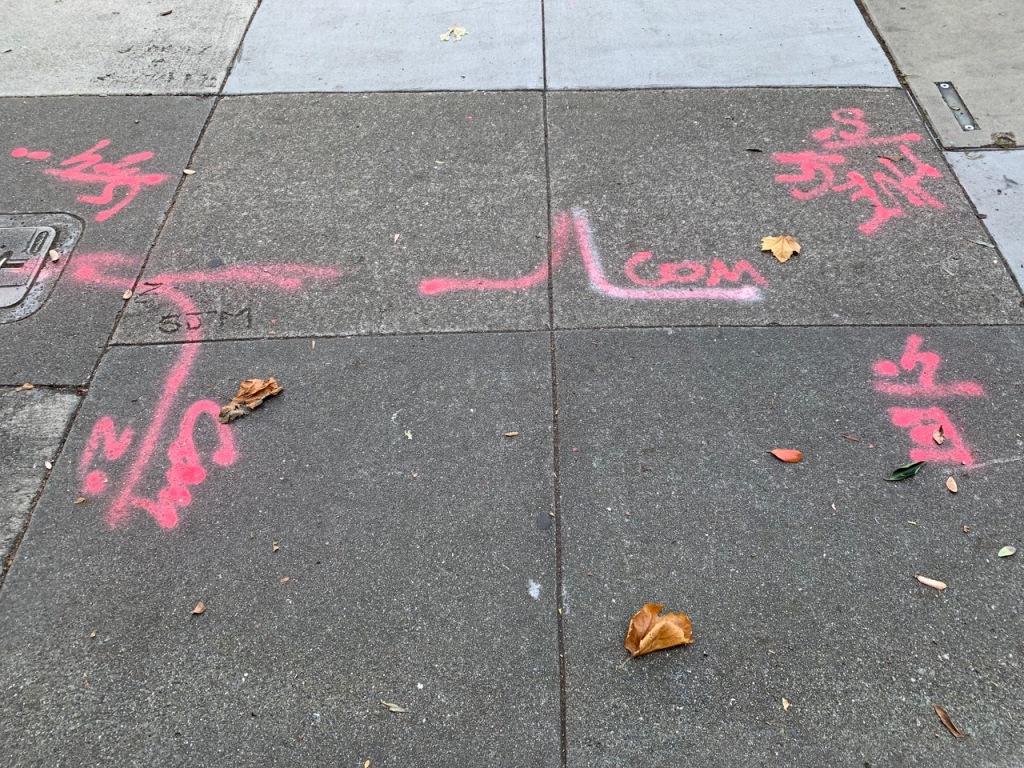
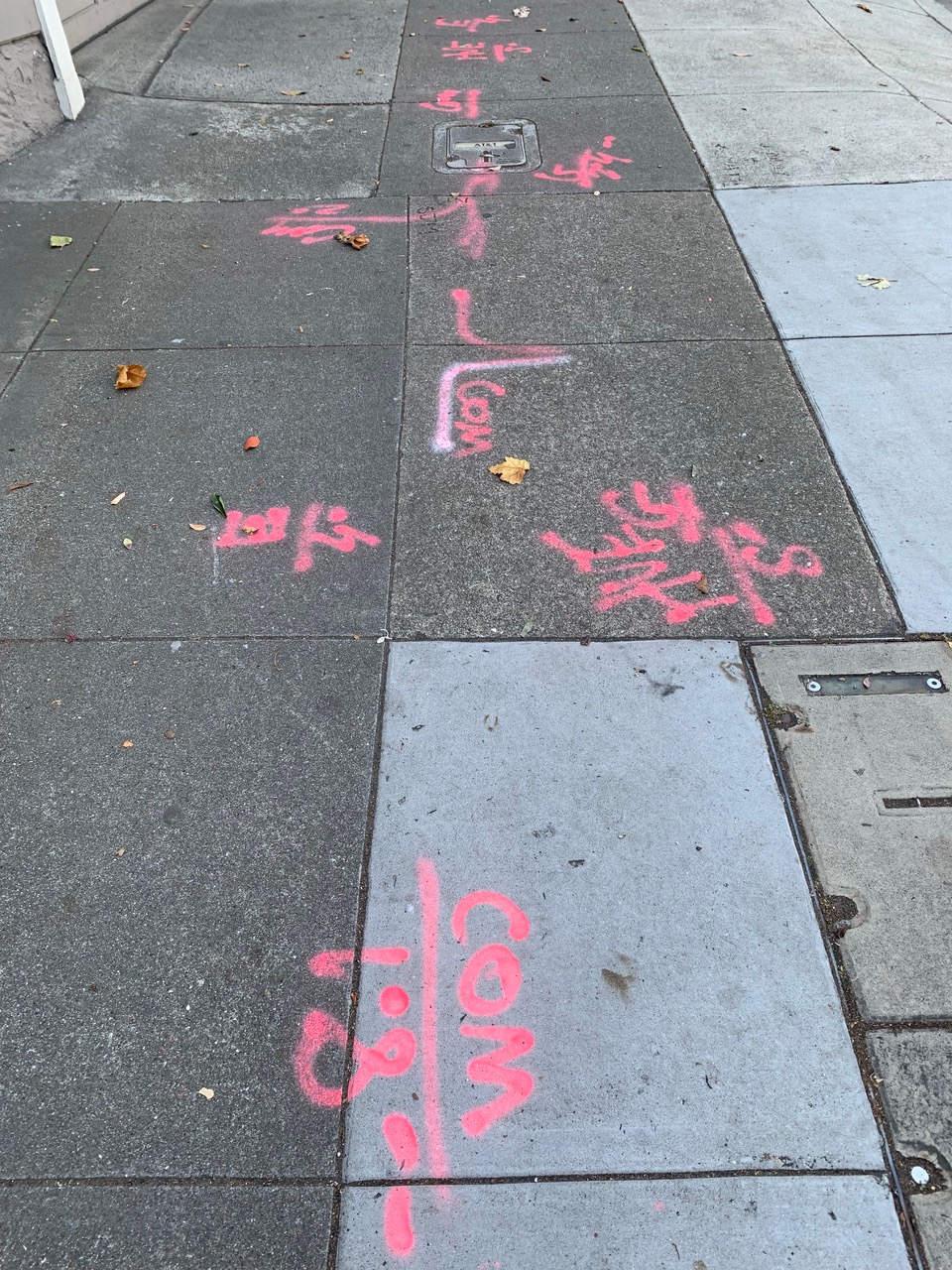
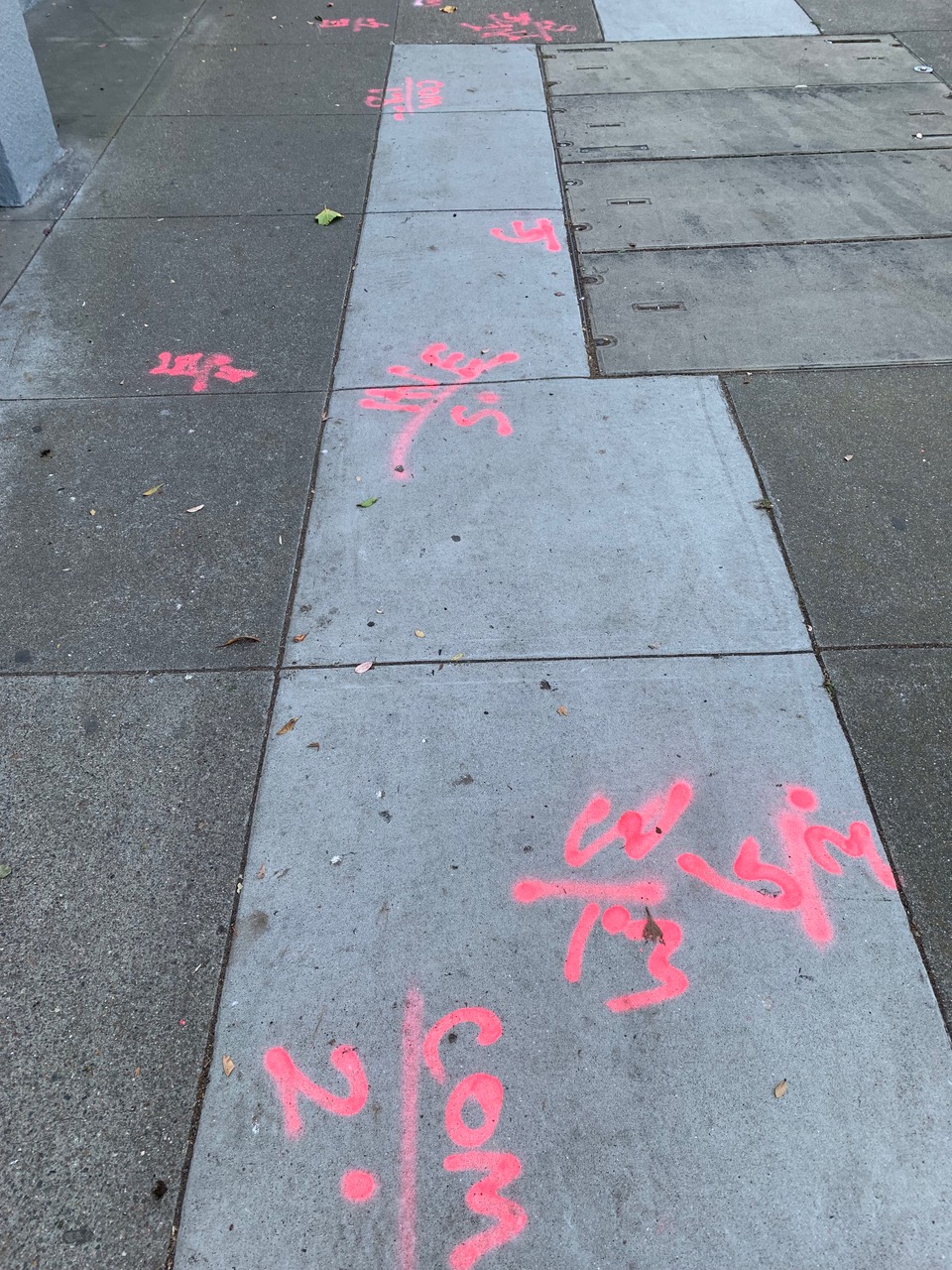
Images: In August 2022, I photographed these San Francisco sidewalk markings made by utilities. They’re overlooked and meaningless to most people until noticed and deciphered. Due to their mysteriousness, they reminded me of how Sanskrit writing likewise looks to us unless studied.


 Yoga Spy
Leave a Comment