
The summer after my freshman year of college, I returned to my hometown on the Big Island. I was determined to find a job. I’d never had a real job, one that required me to interview, deal with strangers, maybe even wear a uniform. The girls I met at college seemed grown up. In my mind, they all had “experience”—jobs, boyfriends, trips abroad, stories to tell. I felt like a blank slate.
I can’t recall why, but I sought a waitress job. Maybe it suggested a rite of passage, not only for struggling artists in LA, but for anyone, anywhere. For me, it was an unexpected choice. I was quiet, studious, tidy, and thorough. I knew I could handle an office job. Working with pen and paper, facts and figures, would have been a piece of cake. But that seemed boring, too easy. Waitressing was the opposite of who I was—or who I thought I was.
Anyway, I somehow got hired at a longtime diner, Roy’s Gourmet, an odd name that seemed ordinary if you grew up with it. It was a typical Hilo restaurant, casual, neither huge nor tiny, with maybe twelve or fifteen booths. Although it was a fixture in town, my family and I weren’t regulars there, so everything about it was unfamiliar.
I worked the weekday morning shift, serving breakfast and lunch, with two other waitresses. Myra, in her mid-twenties, was already an experienced server—or maybe her world-weary expression just made her seem that way. She had shiny black hair, streaming down her back. She wore thick, black, liquid eyeliner, and stuck strips of Scotch tape on her upper eyelids to form visible creases or “double eyes.” She was petite, around my height, but, in contrast to my wispy frame, her limbs were sturdy and suntanned. She could carry two plates per arm.
During her breaks, Myra would smoke cigarettes outside the back door. She’d stand there, gazing at nothing, holding the cigarette as if she’d been born with it. Sometimes, her boyfriend would stop by. They might chat, smoking. I’d glance at them but look away, to give them privacy, if they kissed.
The senior waitress was Harriet, perhaps in her 60s—I don’t know—older than my parents were back then, anyway. She was short and everything about her was round, including her head, capped with permed, dyed curls. Her face resembled a ball of dough, her eyes like two raisins. A longtimer at the restaurant, she had a comfort level with the owner couple, enough both to joke with them and to complain behind their backs.
Harriet seemed different from the other Japanese ladies I knew, more blunt, less reserved. Working together, she’d give me advice on what to do, where to find things. But Myra knew the score and would try to protect me. “Don’t let Harriet switch tables with you,” she said. “That group gives good tips, and she knows it. That’s your table.”
One day, chatting on break, Myra said, “You’re smart to go to college, get an education, move away. You’ll have options.” She confided that she wants to become a hair stylist, but can’t afford it. She needed to pay off debts, save up, get her life together. “I’m in one bind,” she said in pidgin. “Don’t get yourself in one bind.”
At Roy’s Gourmet, in my waitress getup and white shoes, I had another life. I don’t recall seeing former classmates or friends, what a relief. During my weekday morning shift, patrons were either retirees, grandparents with preschool grandkids, working people taking early lunch breaks.
We waitresses had to prepare a few things: Insert sliced bread in the revolving toaster (two cycles for the oldster who preferred his toast “little bit burnt”). Make fruit punch with a squirt of syrup (never the same amount) and ice water. Spoon out slippery seeds from half a papaya. Scoop sticky white rice into chawan bowls, steam from the cooker momentarily scalding my skin.
I could carry only two plates, one per hand—and if using a tray only one heavy dish. Even so, I once tipped a bowl of hot saimin, spilling broth on a woman’s lap (just a few drops!). But of course the cooks did all the real cooking, which was foreign to me. How did they do it? Fry egg, flip pancakes, sizzle bacon on the vast, flat-top range, constantly drizzled with oil, joking and “talking story” all the while.
Hilo, on the rainy side of the island, isn’t as attractive to visitors as sunny, dry, beachy Kona. But tourists occasionally wandered in. Once, I served a middle-aged couple, haole and obviously tourists. I might have asked whether they’re enjoying their visit. The man commented, “It doesn’t feel like Hawaii here. There are so many Japanese!” He was puzzled and didn’t hide his disappointment. What? Isn’t it obvious that I’m Japanese? I had no words.
At this very restaurant, the owners were local Japanese, the staff were local Japanese, Filipino, Hawaiian, or mixed. But none of these ethnicities were like their native counterparts. Local Japanese were nothing like Japan Japanese; same for Filipinos. As for Hawaiians, they, too, were living mainstream American lifestyles. That was the Hilo demographic—and that was local culture in real life.
After that summer, I never waitressed again. I also never set foot in Roy’s Gourmet, although I’d drive by countless times during my hometown visits. During one visit, several years later, I suddenly spied a name in the local paper. It was an announcement by a hair salon, introducing a new stylist. I held the paper close to my face and scrutinized the headshot. Her hair was cropped into a spiky shag; her face more mature. But it was definitely Myra. I smiled to myself. She did it!
Postscript
This post has nothing to do with yoga. But it’s summer—and shouldn’t summer signify a break? Even if we’re not in school anymore, we can break from our usual routines.
Well, it’s unusual for me to reminisce. I rarely, almost never, reminisce about that first job. I might recall bits and pieces, momentarily, and then refocus on the present—my work, my relationships, my life today.
Is there value to remembering the past? What does that summer, that experience, mean to me today? Maybe not much, if I rarely think about it. But surely it affected me.
If nothing else, the past gives us context: who we once were versus who we are now. Isn’t it staggering to think about then and now? How did we get from there to here?
Maybe I’m thinking these thoughts due to my current fiction project—to read the oeuvre of Haruki Murakami. His typical protagonist is a young man, seemingly unremarkable, but actually an iconoclast, a deep thinker, an avid reader and musicophile, who ends up in bizarre situations. The narrative voice is loose and colloquial, but there’s an emotional gravity in Murakami’s stories. The protagonist might seem lost but, whatever his age (which seems to parallel the author’s age), has a solitary, contemplative side. He often looks back at his life, trying to make sense of the ruthless passage of time.
It’s summer. Stroll down your own memory lane…
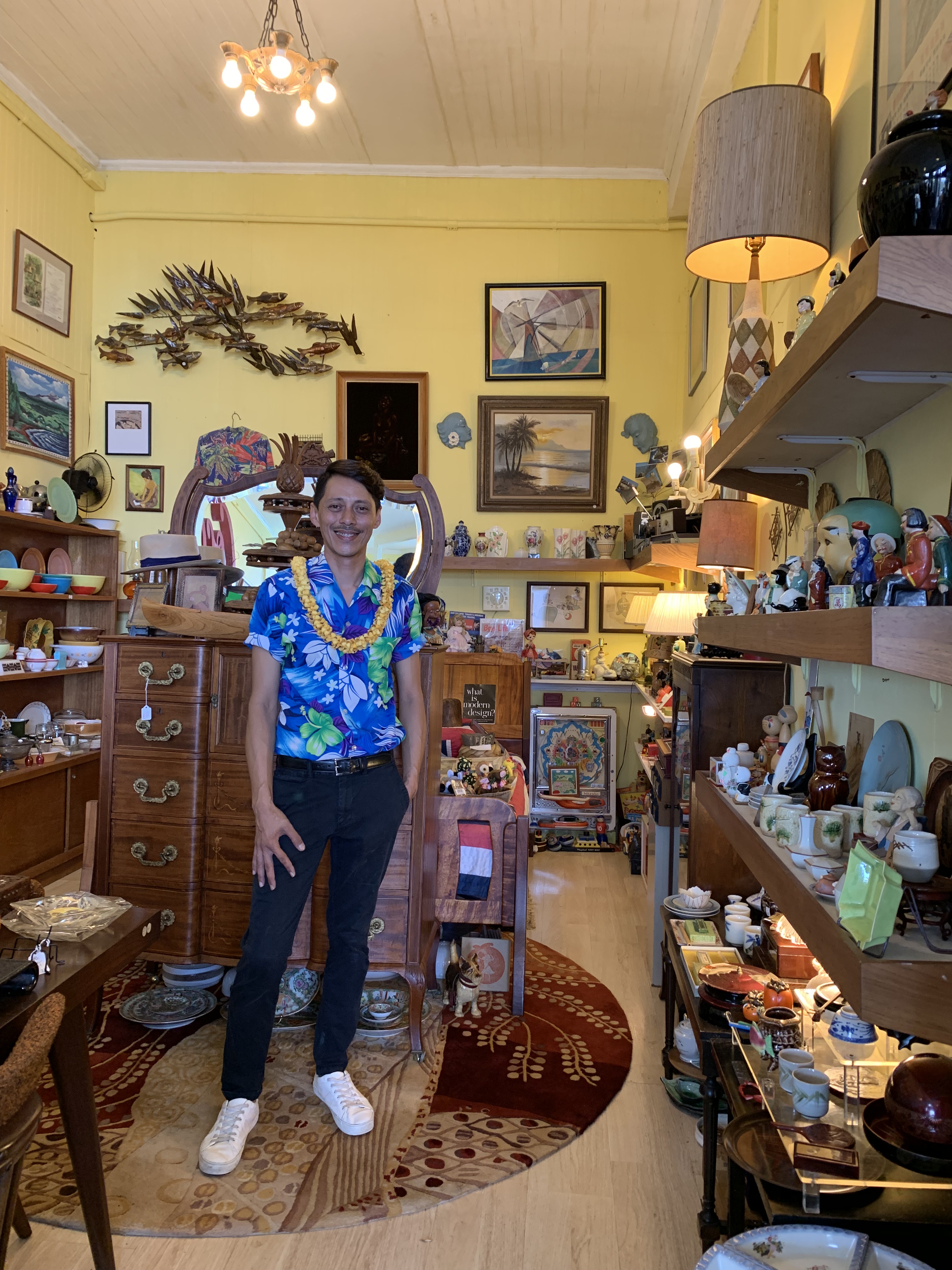
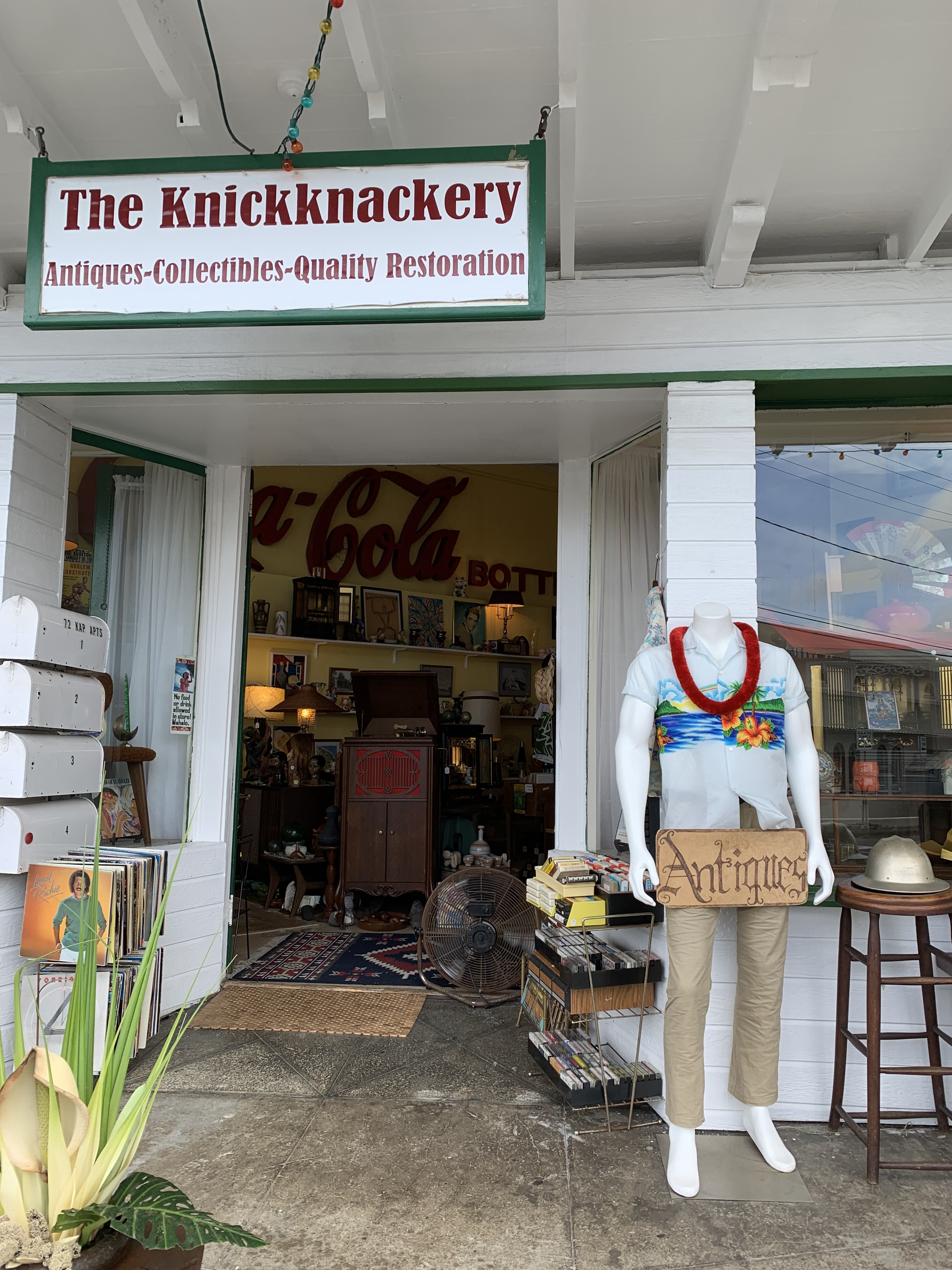
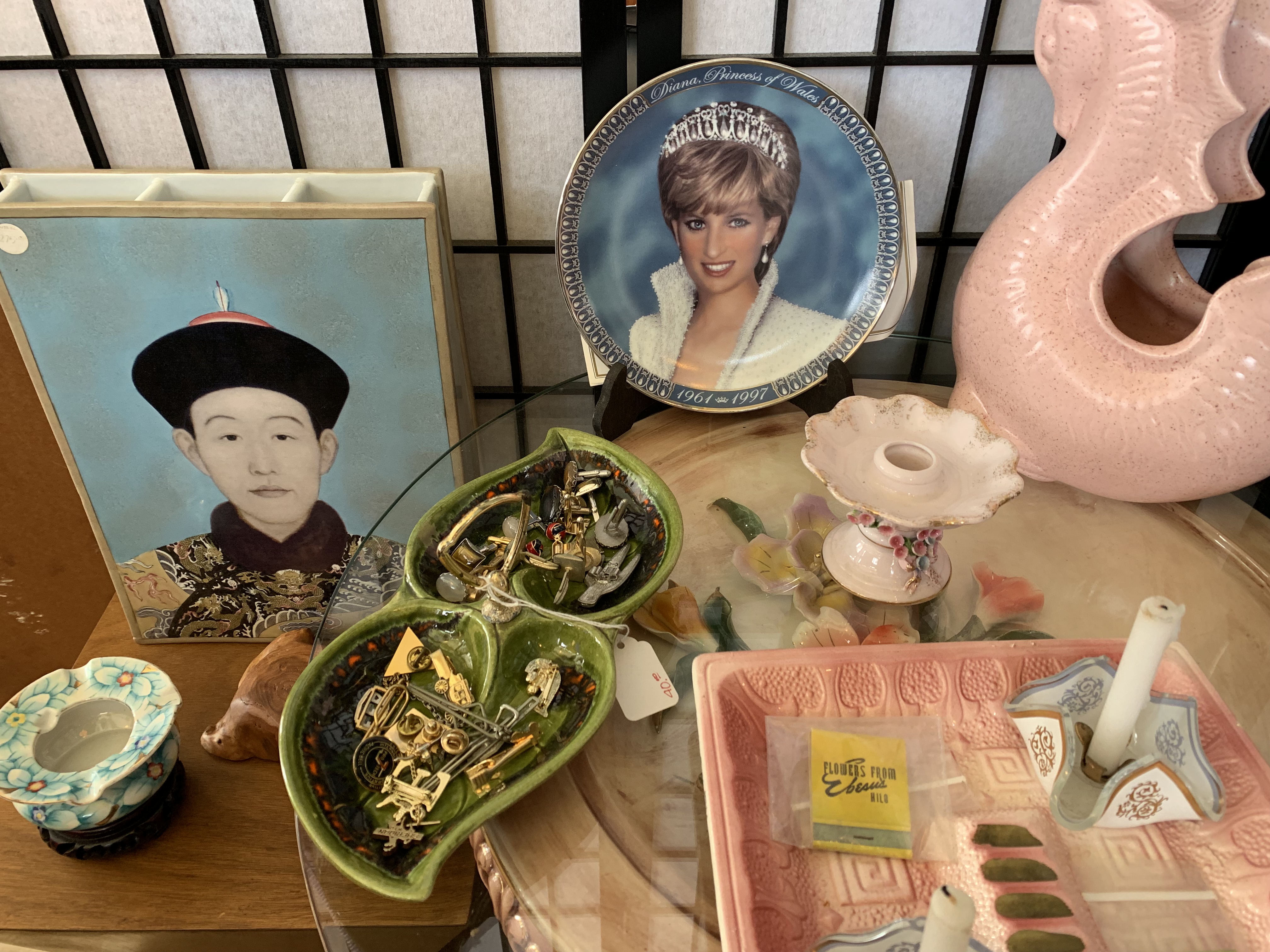
Images: The Knickknackery, Hilo, Hawaii, September 2019, Luci Yamamoto. If you’re in Hilo, don’t miss Keli‘i Wilson’s gem of an antique shop. Note: I took these photos during my final Lonely Planet research trip. The shop has since moved to Ponahawai Street. See https://www.facebook.com/TheKnickknackeryHawaii/.


 Yoga Spy
Leave a Comment