
In Berkeley in the late 1990s, I learned to balance in Salamba Sirsasana (Supported Headstand) step by step. At first I didn’t even try to balance, but just kicked up to a wall, one leg at a time. Once up, I’d try moving my feet away from the wall. Wobbly at first, I eventually could balance on command. So I’d set up farther from the wall, using it only if needed. By then I could go up with both legs.
For a couple of years, I did Sirsasana a shin’s distance from a wall. Even if my balance was quite steady, I preferred having a safety net. If I lost my balance, I could “toe” the wall.
I can’t recall when a fully freestanding headstand became doable. In class, when teachers saw me balancing inches from a wall, they encouraged me to venture farther away. Eventually, for dropovers into Dwi Pada Viparita Dandasana I had to forsake the wall. The more I balanced in Sirsasana, the more routine it became.
I assumed that my incremental progression—from “at wall” to “near wall” to “away from wall”—was the norm. So I was perplexed when I moved to Vancouver and heard an Iyengar yoga rule that students must do headstand either with knuckles touching wall or freestanding—nothing in between. Why was it wrong to be a shin’s distance from a wall?
What happens if you fall?
I was told that if you fall near a wall, you’d hit your back and possibly injure your neck. I was skeptical. Based on my observations, when people fall backward out of Sirsasana, they lead with their legs—so their feet would touch the wall first. Remember my safety net of toeing the wall?
 Unless you’re trained in gymnastics, martial arts, or other sports that teach falling techniques, the “tuck and roll” is generally not an innate reaction. How many adults are comfortable even doing a basic somersault under controlled circumstances, much less in a surprise fall?
For me, rolling out of headstand required practice and a bit of daring. Just over a decade ago, on assignment in Honolulu for Lonely Planet, I visited a couple of yoga studios. At Iyengar Yoga Honolulu, I took a class with Ray Madigan. During headstand in the middle of the room, Ray corrected my form. I commented that I hold back in the pose to protect myself from falling backward.
To conquer fear of falling, he demonstrated how to “tuck and roll” out of the pose. From Sirsasana, he let go of his hand clasp, bent his legs toward his abdomen, tucked his chin, and rolled onto his back. The floor was hard and unforgiving, but he sprung up and invited us to try it.
Well, I was relieved to discover that I could fall onto my back and live to tell. Back in Berkeley, I practiced this fall on padded mats at the gym. It was a confidence builder, but ultimately contrived. In reality, if I lost my balance near a wall, my feet always touched first. To date I have never fallen in the middle of a room, but I have witnessed falls. And the typical result is a feet-first, unplanned dropover.
I always questioned this all-or-nothing rule, which also hinders early attempts to enter headstand with both legs. Initially it’s difficult to go up without counterbalancing: the pelvis juts behind the head and upper torso. If flush against a wall, there’s no space for such offsetting.
Blanket rules
Apparently the current RIMYI mandate is to do Sirsasana slightly away from a wall (if a wall is needed)—and to require two-legged entry (for freestanding headstand). Directives from Pune often change over time, so I was not surprised. The Iyengars seem to shake up rules to address various aspects of the asana or various habits of the students.
Do the new rules make sense?
I have my opinions, and I hope that all Iyengar yoga practitioners have their own. We must scrutinize rules, especially blanket rules that are strict and all encompassing. Come to your own terms with the teachings.

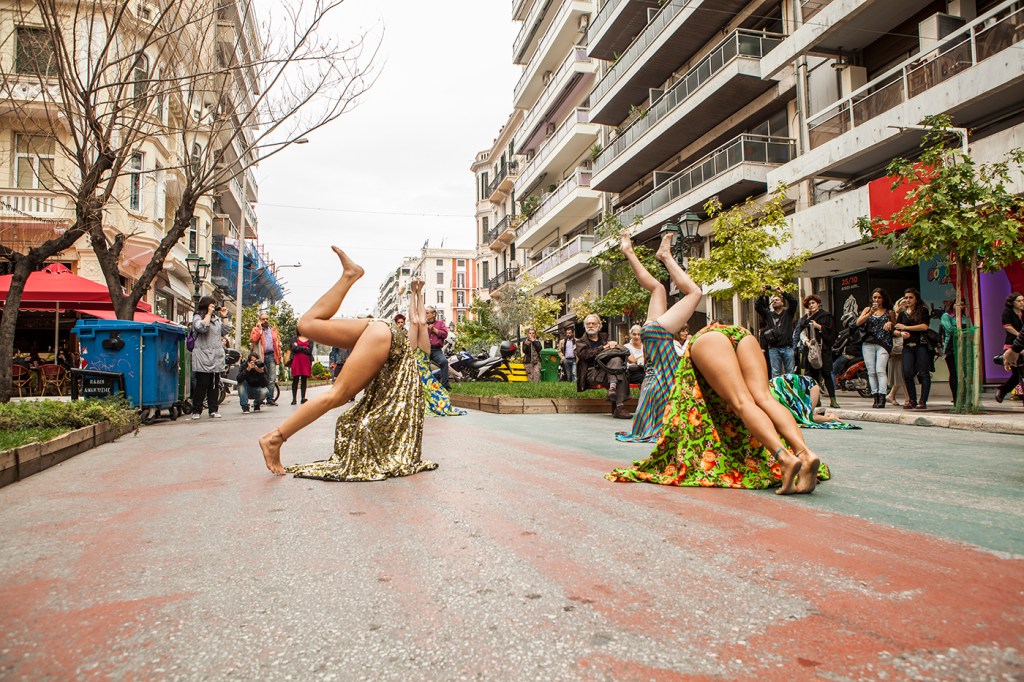
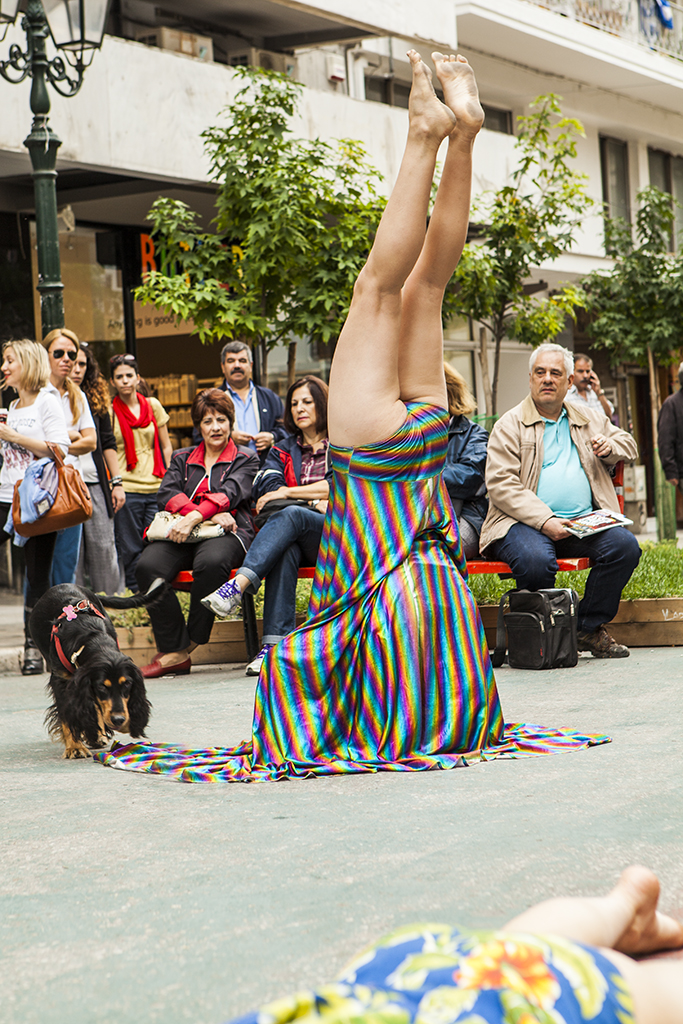
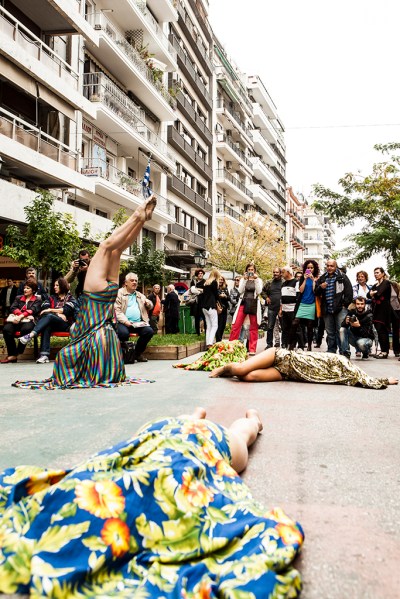
Images: Trees, performance art done in Greece by Brazilian artist Clarice Lima, October 14-19, 2013, photographed by Eleftheria Kalpenidou; see also Shannon Cochrane on Trees


 Yoga Spy
Leave a Comment